
About Dorizbaz
Dorizbaz
Waste segregation rates in developing countries remain below 40 percent for each household. Although municipalities have implemented penalties and incentive plans, these measures have not been successful in motivating people to participate in recycling and waste segregation. The rates in developing countries are even lower, and encouraging community engagement in these practices requires new solutions that can intrinsically motivate individuals to take part. Dorizbaz proposes a multiplayer location-based extended reality (XR) game designed to gamify urban activities such as exercising and managing segregated waste disposal. In Dorizbaz, players join servers from various locations and are placed in different areas on the game map within a mixed-reality environment to compete against one another.

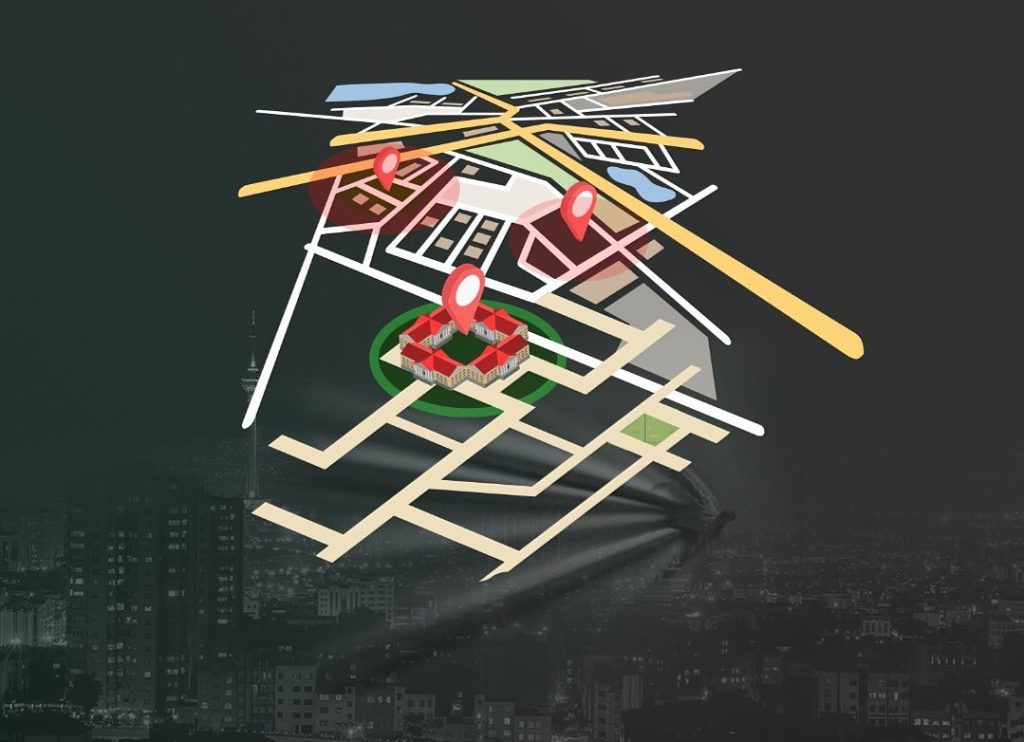
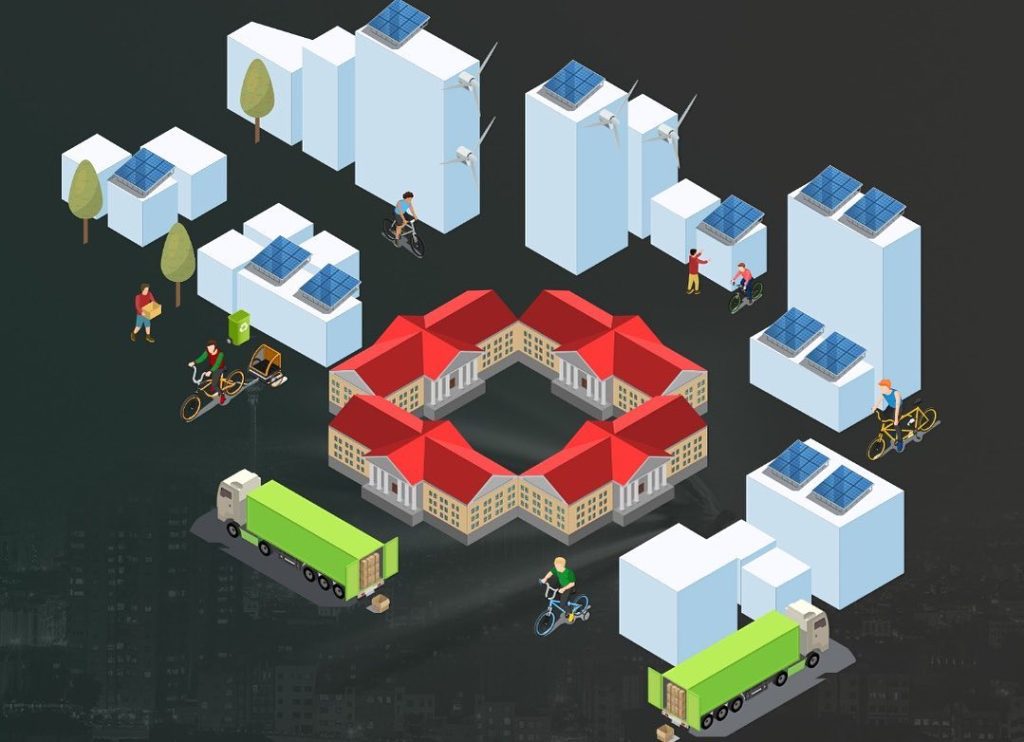
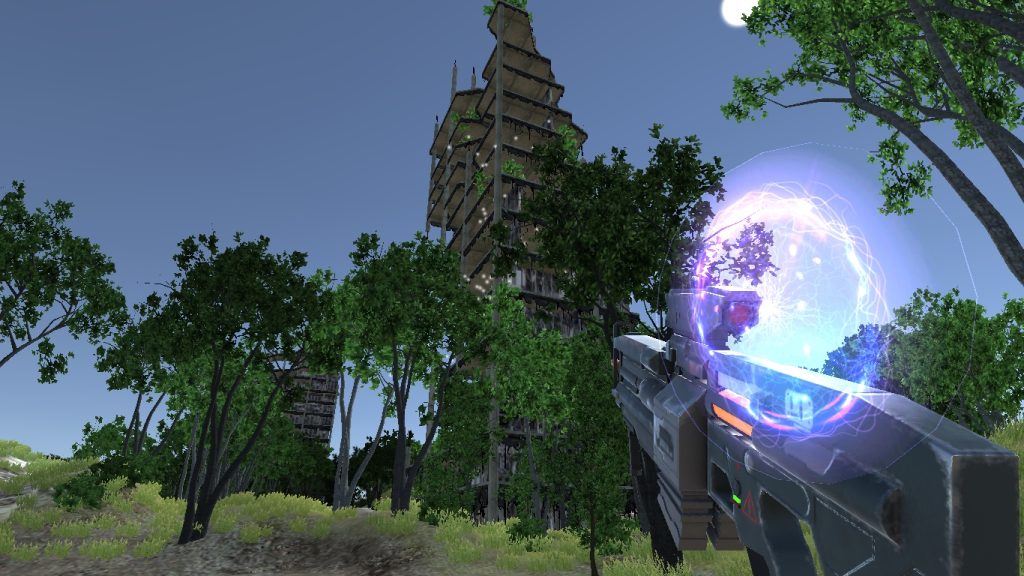
Initially, players aim to eliminate opponent non-player characters (NPCs) or players from opposing teams who approach them with the intention of stealing their belongings. To evade these threats, players must navigate urban areas. They can shoot NPCs with plastic bags, which serve as limited ammunition, as shown in the game diagrams. To acquire more ammunition, players need to explore their neighbourhoods or scan barcodes on aluminium cans or plastic bottles. They can stop opposing character bots by shooting them or running away from them within the district. Additionally, players should specify a destination point on the game map as their goal, which serves both as a route for exercise and jogging, as well as locations designated by municipalities and environmental institutions for waste disposal.
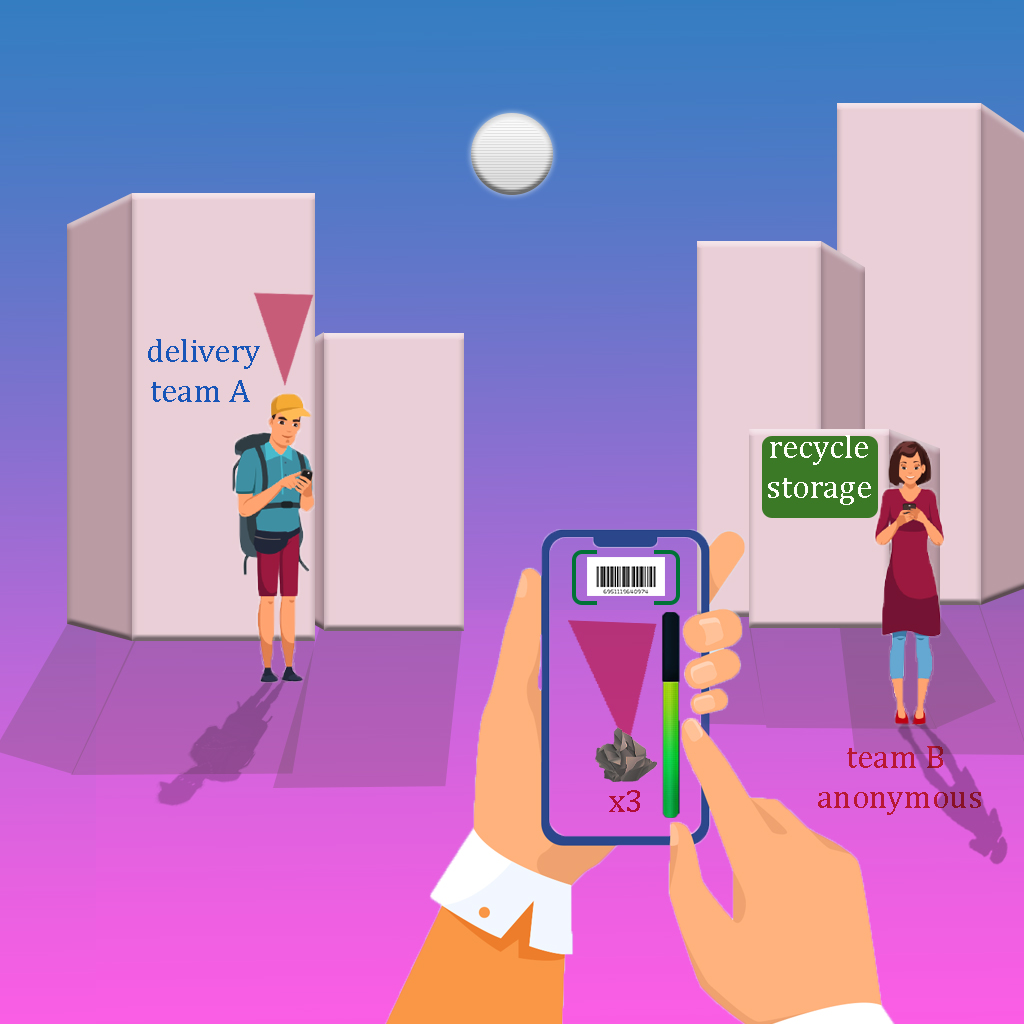
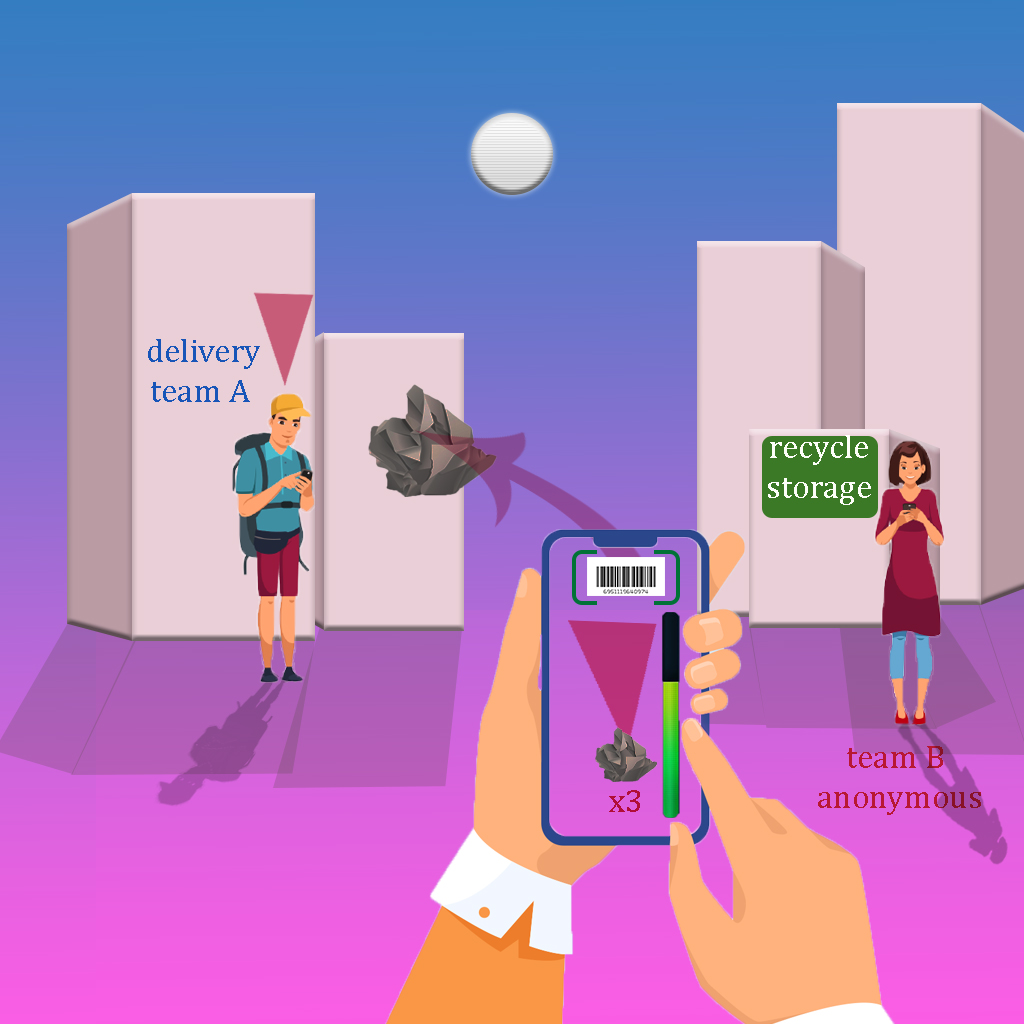
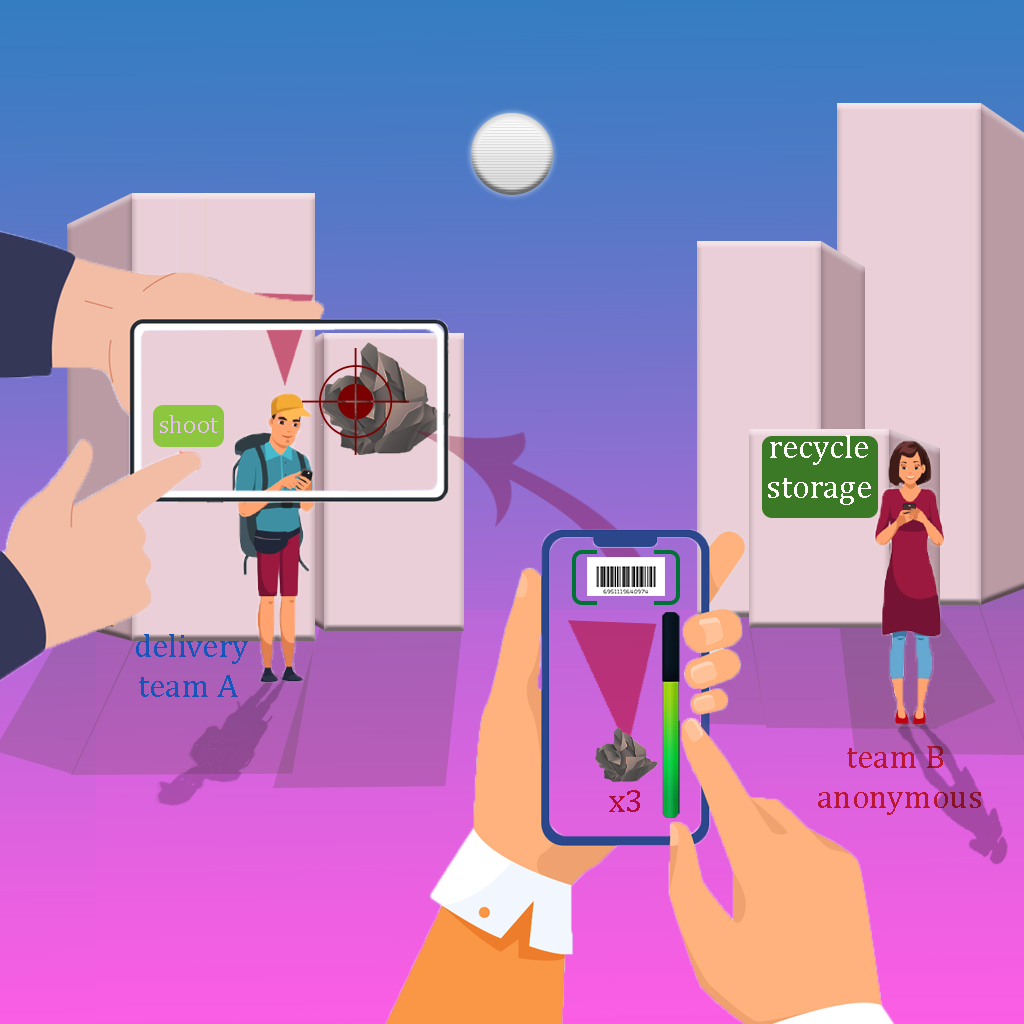
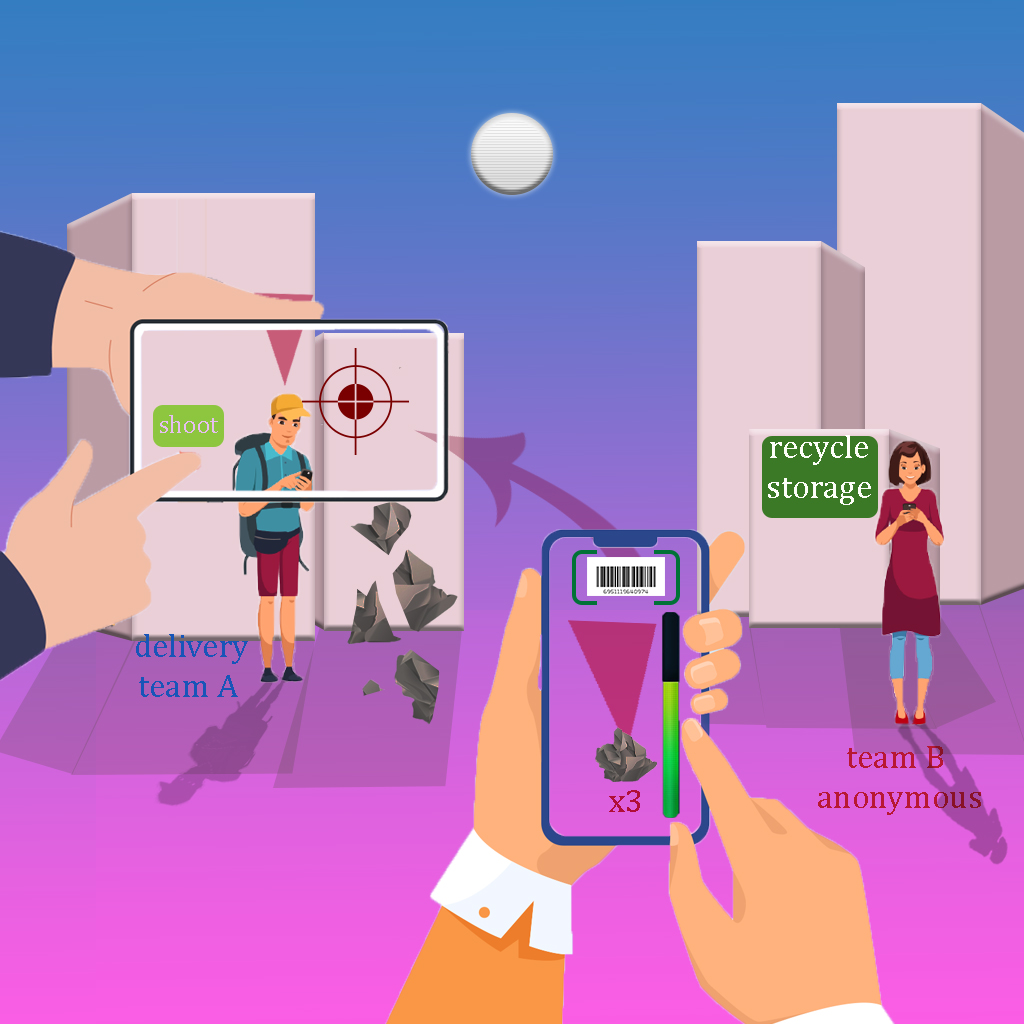
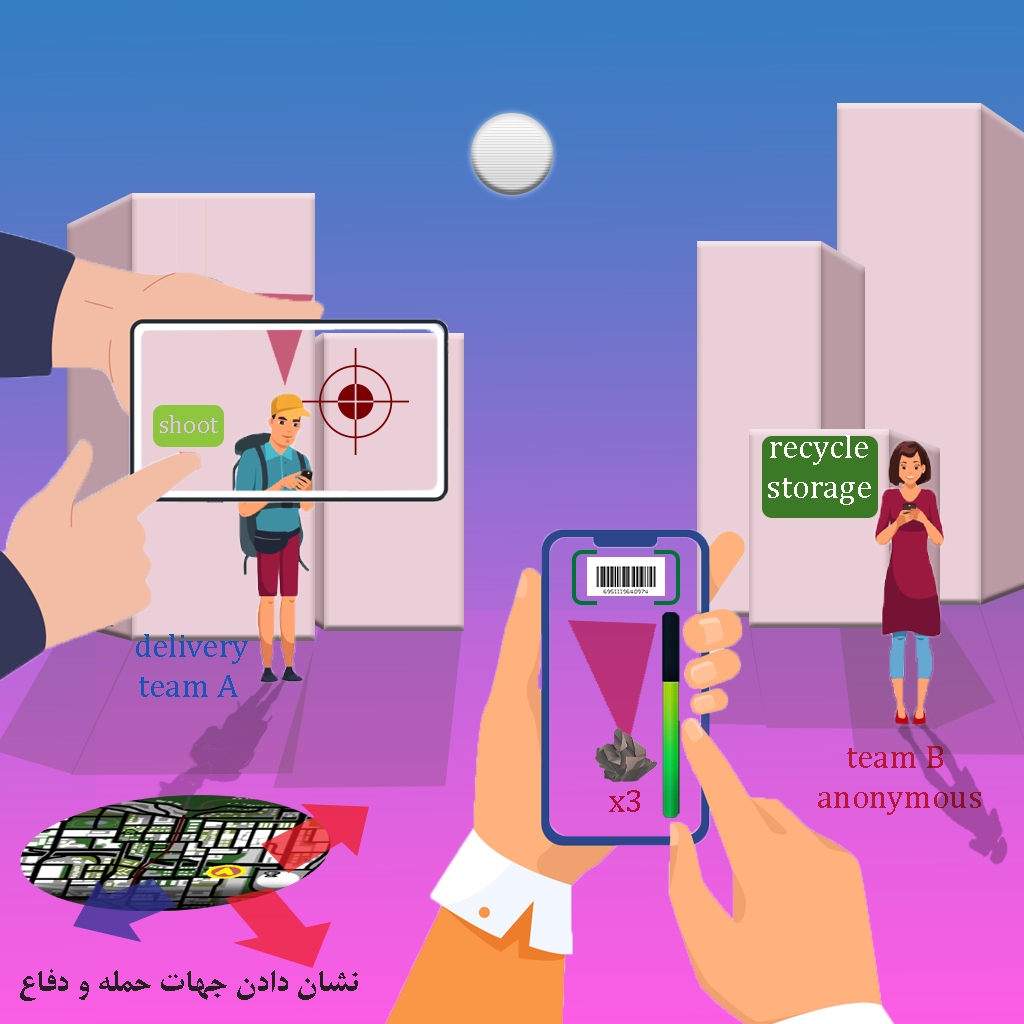
If they are not captured by the opposing team and reach the defined destination, they win. It is expected that players will deliver their segregated waste during this process. If they refuse to send a picture of their waste delivery, their points will be awarded to the opposing team as a penalty. However, the game aims to remain enjoyable and engaging, not oppressing, to encourage more people to participate in waste segregation.
The Dorizbaz game encourages players to explore urban areas, strategically engaging with online competitors in teams while transporting their separated waste. Cities that prioritize environmental concerns have designated locations for waste disposal, implementing special bins throughout their territories for the separate collection of various types of waste, such as plastic, glass, paper, and metal. These collection points can be viewed as waste delivery hubs, and players can be guided to these locations in the Dorizbaz game for proper disposal.
In this scenario, each player is encouraged to collect and deliver waste materials to designated places in their own neighbourhoods, from China to the USA, while competing with players from all around the world and leveraging their movements within urban areas.

Game Story Approach
A breakthrough invention
In the year 2222, all non-renewable resources have been completely depleted due to excessive exploitation and misuse. The valuable metals have been wasted and are now mixed in vast landfills, making them indistinguishable amidst the piles of waste. The essential elements for industries and mining have been extracted, and there is no new source of non-renewable resources.
However, a breakthrough invention by a scientist has led to the creation of a communication channel with the past—a tunnel that enables the transportation of materials through time. Large corporations are fiercely competing to utilize this technology to retrieve resources from the past and revive their businesses in the present. In this context, players in the game also act as competitors, striving to reach these time tunnels, interacting and competing with each other.
The objective is to reclaim resources from the past and contribute to the sustainable management of waste in a competitive and interactive gaming environment.
One-Year / Five-Year Impact
It is expected that waste segregation and proper disposal will increase with the expansion of Dorizbaz. Based on patterns observed in similar recycling apps, reaching a target of 200,000 active users would be feasible. By incorporating these users into our network, we can recover approximately 1-2 kilograms of plastic and aluminum per user each month, which is worth around 20-50 cents per kilogram. This would also contribute to reducing environmental pollution by preventing waste from being disposed of in landfills and allowing it to be reintegrated into industry.
The Total Addressable Market (TAM)Add Your Heading Text Here
The Total Addressable Market (TAM) for Dorizbaz, in developing countries, starts with the urban population of about 2.25 billion (50% of the 4.5 billion people in developing nations as of 2025). Narrowing it down, roughly 1.6 billion have smartphones (70% penetration), and 640 million are in the target 15-35 age group, who vibe with the game’s active, social, tech-driven appeal. Assuming 50% of them are casual mobile gamers and 20% would try an XR game, the TAM lands at 64 million potential users—those who could theoretically play if barriers like competition or tech access vanished.
On the revenue side, if 10% of those 64 million (6.4 million) become active monthly users, each collecting 1-2 kg of waste worth 20-50 cents per kg, that’s $1.28 million to $6.4 million in annual waste value. Add in-game monetization—like $1-2 per user yearly from tokens or ads—and the TAM could hit $7-12 million annually in a no-limits scenario. Realistically, starting with 200,000 users in year one makes sense as a foothold, with the broader 64 million or $7-12 million TAM showing the long-term potential if Dorizbaz scales globally.
Sales and Distribution Channels
Dorizbaz reaches users via app stores (Google Play, Apple App Store) for easy downloads. Our marketing vibe screams TikTok and Instagram, Distributing via viral challengeslike “Drop your waste, win the race!” with shareable links to download. Teaming up with cities communities to promote Dorizbaz as a civic tool. They could push it via DM blasts, community events, or posters at waste hubs “Play Dorizbaz, clean your streets!” This taps local trust and gets players onboard where infrastructure’s already in place.
Telecom bundles (e.g., Jio, MTN) offer zero-rated access, while universities and schools in urban areas could distribute Dorizbaz to students via campus apps, workshops, or sustainability clubs. A leaderboard for “greenest campus” could ignite rivalries and downloads. Corporate CSR (e.g., PepsiCo) sponsors in-game events, blending organic buzz, partnerships, and tech access.
Marketing Message
We can create campaigns and share videos on social media to engage academic communities, university students, and the general public. Our message is that this effort is not just a game; it is our responsibility to preserve our resources. We can incorporate in-game tokens and incentives as gamification elements, giving users the opportunity to invite their friends and connect with people around the world.
Product Complements / Value Chain Partners
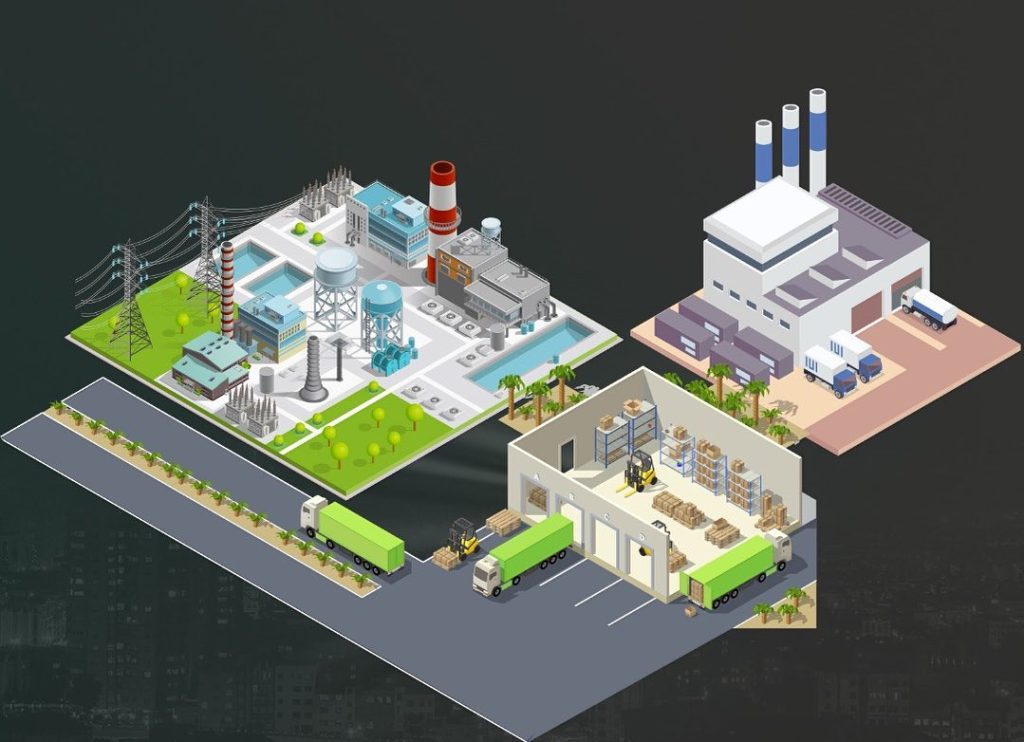
Value chain partners include municipalities for waste hubs, NGOs like WasteAid for outreach, and waste firms like Evreka for processing player-collected materials. Tech partners (e.g., Unity), telecoms (e.g., Safaricom), and corporates (e.g., Unilever) could enhance development, distribution, and funding. Together, they create a scalable ecosystem—municipalities gain segregation rates, firms get waste inputs, and Dorizbaz grows toward its goal.
Current and Future Competitors for Dorizbaz
As current competitors, Recyclebank rewards recycling with points for discounts, competing with Dorizbaz’s user base via scalability. ZeLoop offers crypto rewards for recycling in 140+ countries, rivaling with incentives. Litterati geotags litter with leaderboards, targeting engaged youth. BinIt, an Indian app, educates on sorting, hitting Dorizbaz’s developing market focus. JouleBug gamifies sustainability broadly, expandable to Dorizbaz’s turf.
Future Competitors: Niantic could launch an AR recycling game outscaling Dorizbaz with tech and reach. Local startups (e.g., Paytm) might localize recycling games cheaply. Waste giants like Biffa could gamify services with AR. EdTech (e.g., BYJU’S) might gamify eco-education for youth. Social media like Tencent could integrate viral recycling mini-games, leveraging billions of users. Dorizbaz’s XR edge stands out now, but scale and agility will counter future threats.